Your sewer line keeps backing up because something is repeatedly restricting flow or the pipe cannot carry wastewater away-most often roots, grease and debris, a sag, or a damaged section. If several fixtures gurgle or back up together, the trouble is usually in the main line rather than one sink trap. In Whittier, mature landscaping and older buried piping can make a temporary clearing recur until the actual obstruction or defect is found. We explain the common causes, what to do during a backup, and how a camera inspection helps identify a lasting repair.
Why sewer lines keep backing up in Whittier is a plumbing diagnostic question that a sewer camera inspection answers by showing where wastewater flow is restricted and what condition the pipe is in. Our team uses the view to distinguish a removable clog from roots, a break, a low spot, or another repeat-causing defect.
Why does my sewer line keep backing up in Whittier?
Repeated sewer backups in Whittier usually mean the same blockage remains partly in place or a pipe defect keeps catching waste after each temporary clearing. A drain that works for a few days and then slows again is a clue: the line needs diagnosis, not another blind attempt at clearing.
Pay attention to the pattern. If only one bathroom sink drains slowly, the issue is likely in that fixture branch or its trap; if a toilet, tub, and floor drain react together, the shared main line is a stronger suspect. A sewer line blockage in Whittier homes can also show up as bubbling in a toilet when a washing machine empties or water rising in a shower when you flush.
We provide Sewer Camera inspection Whittier CA to trace recurring symptoms to the section of pipe causing them. The aim is straightforward: see the obstruction, understand the pipe condition, and decide what work addresses the cause rather than just the symptom.
How Whittier homes show a main-line backup
A main-line sewer backup in a Whittier home often affects multiple fixtures at once, especially the lowest drains on the property. You may hear gurgling, notice a sewage odor, or see water push up through a tub or floor drain when another fixture releases a large volume.
Symptoms can intensify during heavy household use. A 15- to 20-minute washing-machine discharge, several toilet flushes, or a long shower sends more water through the same pipe; a partial obstruction can no longer keep pace. A single slow fixture, by contrast, is less likely to indicate a blockage beyond the main connection.
Whittier's housing stock includes homes with different pipe materials and ages, so symptoms alone cannot tell you whether you have roots, a broken joint, or a belly in the line. In older blocks, including the area's historic residential streets, a Sewer Camera inspection in Whittier Historic District can help pinpoint whether the repeat problem is in a private lateral or closer to the house.
What causes repeated sewer backups in Whittier?
Recurring sewer backup causes in Whittier include tree-root intrusion, grease buildup, foreign objects, pipe offsets, cracks, corrosion, and a sag that holds waste. Each creates a different pattern, and the right fix depends on what the pipe is doing rather than how unpleasant the backup looks.
Roots entering joints and cracks
Roots do not usually break into a sound, sealed pipe; they exploit a gap, joint, or crack where moisture is available. Once inside, fine roots catch toilet paper and solids, and the opening can grow into a dense obstruction. Tree roots and sewer backups in Whittier, California are a familiar pairing in landscaped neighborhoods, but a nearby tree alone does not prove the cause.
Repeated snaking may cut roots enough to restore flow, then leave the entry point and remaining fibers behind. As roots grow back, the symptoms return-sometimes in weeks, sometimes over months, depending on the opening and use.
Grease, wipes, and accumulated debris
Grease cools and sticks to pipe walls; "flushable" wipes can hold together instead of dispersing like toilet paper. Add paper, hair, and soap residue, and a rough or narrowed section becomes a collection point. A blockage that sits close to a cleanout may clear easily but return if the buildup extends farther along the line.
Pipe damage, settlement, or a low spot
A separated joint, crushed section, corrosion, or offset can snag waste and prevent complete drainage. A belly-a low section caused by settlement-holds standing wastewater and solids between uses. You can clear the material temporarily, but the geometry remains, so the same area keeps collecting debris.
Fall is a useful time to notice whether backups follow periods of heavy leaf drop or increased household use, but leaves in a yard do not automatically enter a sealed sewer. The camera view tells us whether roots, a structural defect, or ordinary buildup is actually present.
How a sewer camera finds recurring blockages
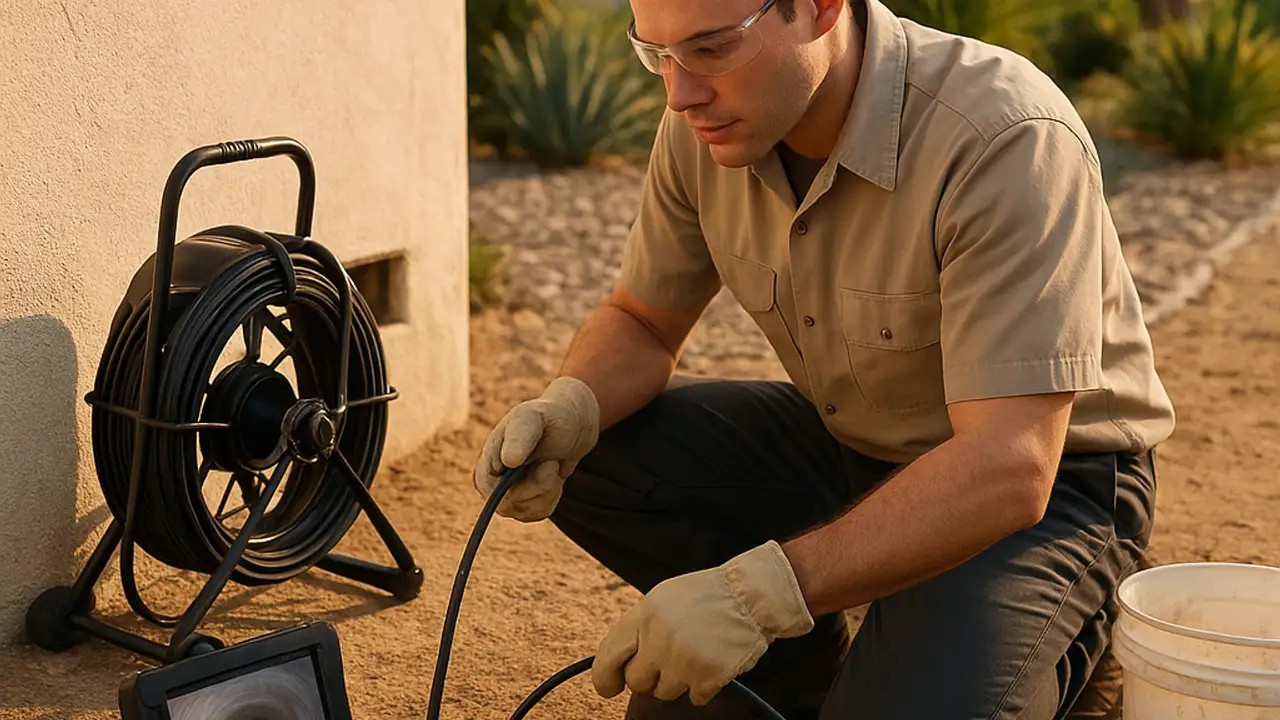
A sewer camera inspection for recurring backups sends a waterproof, lighted camera through an accessible cleanout to show the inside of the pipe and locate the trouble. It helps our team see whether a blockage is isolated, whether roots enter through a joint, or whether the pipe has damage that needs more than cleaning.
During Main sewer line camera inspection Whittier CA, we advance the camera through the main line and record the location and character of visible trouble. A locating transmitter can help map the camera head's position from above ground, making the finding more useful than "somewhere under the yard." Access, pipe diameter, turns, and standing water affect how much of the line is visible.
A camera does not magically repair the pipe, and heavy standing water or a packed obstruction can limit the view until flow is restored. Still, inspection can prevent a guess from turning into unnecessary excavation. A video finding can separate a cleanable accumulation from a collapsed, offset, or root-invaded section.
Homeowners in areas with older connections benefit from knowing where the private pipe meets the public system, because responsibility and repair location depend on the segment. Our Sewer lateral inspection Whittier CA follows that connection and helps establish what is happening along the line serving the property.
What to do while the line is backing up
When a Whittier home's main sewer line is backing up, stop adding water, keep people away from contaminated wastewater, and arrange diagnosis if more than one fixture is affected. Running taps or flushing to "test" the line can push additional sewage into a tub, shower, or floor drain.
Take these steps while you wait for the backup to be assessed:
- Stop using toilets, showers, laundry, and the dishwasher if several fixtures are affected.
- Keep children and pets away from sewage; wear gloves if you must avoid or contain contact.
- Do not pour chemical drain cleaner into a backed-up line; it can remain in the pipe and create a splash or exposure hazard.
- Note which fixtures overflow and what household activity happened just before symptoms began.
If sewage is near electrical equipment, do not step into the water or touch switches. Keep the area clear and get qualified help. For a minor, single-fixture slow drain with no signs of sewage, limit use of that fixture until the branch is checked.
Common mistakes that let backups return
Common Whittier sewer backup mistakes include treating every recurrence as an ordinary clog, repeatedly flushing to check drainage, and relying on a quick cable clearing without finding why the obstruction formed. Those approaches can restore flow briefly while leaving the source intact.
Be wary of assuming roots are the answer solely because trees grow nearby. Roots require an entry point, and the repair plan changes if the camera instead reveals a low spot, cracked pipe, or grease coating. Likewise, a cleanout cap or a short-lived improvement does not prove the full line is clear.
Do not put cooking oil, fats, paper towels, wipes, or hygiene products down the toilet or sink. Scraping pans into the trash and using a bin for wipes reduce avoidable buildup, but good habits cannot correct a broken joint or sagging pipe. If your drains back up again after a clearing, record the interval and affected fixtures; that history helps narrow the diagnosis.
When to call a professional in Whittier
Call a sewer professional in Whittier when two or more fixtures back up together, wastewater returns after clearing, or you see sewage at a floor drain or cleanout. A recurring backup deserves inspection promptly; an active overflow, sewage odor indoors, or water near electrical equipment deserves urgent attention.
We at Aron Leakage Master use camera inspection to identify the blockage or defect and explain the next practical step. Our team can inspect the accessible line, document what the camera shows, and help you determine whether cleaning, targeted repair, or further evaluation fits the condition.
Upfront pricing should be clear before work begins; typical 2026 pricing in the area varies with access, line length, and whether clearing is needed before a useful camera view is possible. The key is to avoid paying repeatedly for the same temporary result without locating the cause.
Frequently Asked Questions
Why does my sewer line keep backing up in Whittier?
Your sewer line likely has a recurring obstruction or a damaged or uneven section that keeps catching waste. Roots, grease, an offset joint, or a belly can all cause repeats after a temporary clearing. If multiple fixtures act up together or the backup returns within days or weeks, arrange a camera inspection rather than relying on symptoms alone.
Can a camera inspection explain repeated sewer backups?
Yes. A sewer camera can show roots, buildup, cracks, offsets, or standing water inside an accessible line, often locating the trouble to a specific section. It cannot always see through a fully packed blockage or water-filled pipe, so clearing may be needed first. The video helps distinguish a cleaning issue from a structural problem.
Could tree roots cause recurring backups in my home?
Yes. Roots can enter through a joint or crack and trap paper and solids, causing backups to return after snaking. A nearby tree is not proof, however; a camera should confirm root intrusion and show its location. If the pipe has an opening, removing visible roots alone may not prevent them from growing back.
Should I use water when the main sewer line is backing up?
No. Stop using water in the home if several fixtures are affected, because each flush, shower, or laundry cycle adds flow to a restricted line and can worsen an overflow. Keep people and pets away from sewage, and avoid chemical drain cleaners. Resume normal use only after the blockage is addressed and drainage is checked.
When should I call a plumber for a recurring sewer backup?
Call promptly when a backup returns after clearing, multiple fixtures gurgle or overflow, or sewage reaches a tub, shower, or floor drain. Treat an active sewage overflow as urgent, especially near electrical equipment. Repeated symptoms within days or weeks are a strong reason to inspect the main line and identify the underlying defect.
Get help with Sewer Camera inspection in Whittier
If your sewer line keeps backing up, Aron Leakage Master can inspect the line and help identify why the problem returns. Call 5625880964 to discuss sewer camera inspection in Whittier.