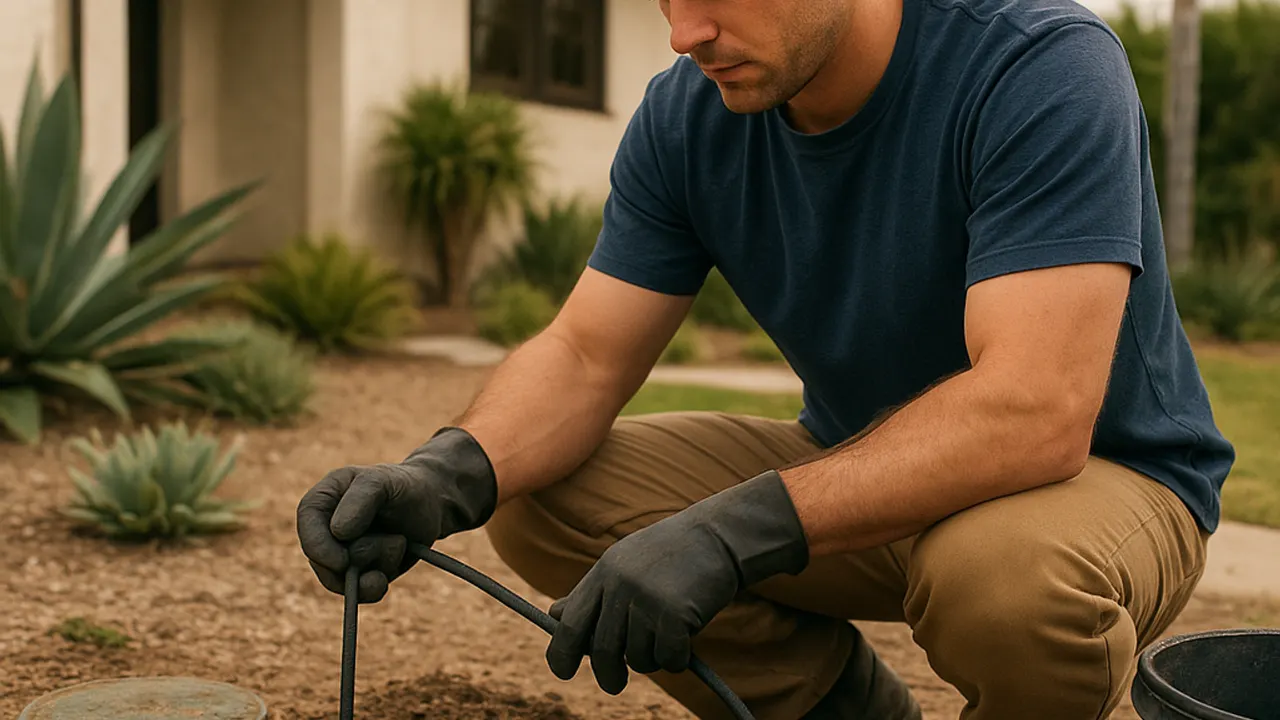
To find a sewer cleanout before an inspection, look first along the outside wall nearest the bathroom or kitchen, then check the side yard, front yard, garage, and accessible indoor plumbing areas. The cleanout is usually a capped pipe opening near the building or property line; do not dig or force a stuck cap to expose it.
For a camera visit in Whittier, finding the access point ahead of time saves setup time and helps us choose the correct entry. A sewer cleanout is a capped plumbing access opening that lets a technician insert a camera or clear a blockage without opening a wall or excavating the line. This plumbing cleanout location guide walks you through likely spots, what the cap looks like, and how to prepare the area safely.
If you cannot locate one, that does not automatically cancel the inspection. We can assess the available access and explain the next practical step.
How to find a sewer cleanout before an inspection
Finding a home sewer cleanout in Whittier starts with tracing the likely route from the house toward the street and checking where a capped pipe could be reached without moving permanent structures. Begin at ground level; cleanouts often sit close to the foundation and can be hidden by soil, mulch, or landscaping.
Walk the exterior slowly and look for a round or square cap, a short pipe rising from the ground, or a flush metal or plastic cover. The main line often leaves the building from the side with bathrooms, laundry, or kitchen plumbing, but the route varies with the floor plan and later additions.
- Check the wall outside the largest bathroom group and the kitchen.
- Inspect both side yards, the front planting strip, and the area near the driveway.
- Look around the garage, utility area, and accessible crawl-space entrance.
- Compare what you find with a property plan or plumbing record if one is available.
We provide Sewer Camera inspection Whittier CA and use the cleanout to feed a flexible camera through the pipe. A clear access point lets us inspect the main drain without guessing where a hidden line turns.
Where is the sewer cleanout outside a house?
Outside a Whittier house, the sewer cleanout is commonly near an exterior wall, in a side yard, or near the route where the private sewer line heads toward the street. A cleanout can also sit near the property line, but its exact placement depends on the original plumbing layout and any remodeling.
Search within roughly 3 to 10 feet of the house first, then broaden your search along the expected sewer path. These are practical search distances, not a guarantee: the pipe may angle beneath a walkway, patio, or landscaped bed before reaching the public connection.
In older neighborhoods, additions and landscaping can obscure the original access. That is familiar around the Sewer Camera inspection in Whittier Historic District, where older homes can have several generations of plumbing changes. A cleanout shown on an old plan may have been covered during a later yard renovation.
Keep your search visual. Do not push a metal rod into the ground to "trace" the sewer; it can damage a buried water, gas, electrical, or drainage line. If you see a marker or utility cover, leave it in place and note its location for our technician.
How to identify the cleanout cap
A sewer cleanout cap is usually a threaded, round plug made of plastic or metal, often 3 to 4 inches across on a residential main line. You may see a square nut or raised center for a wrench, while some caps sit nearly flush with the ground beneath a removable cover.
Common materials include white PVC, black ABS plastic, and older metal fittings. The cap may have a square head, a slotted top, or a hexagonal surface; its color alone does not confirm that it is a sewer cleanout.
Look for a fitting that appears to be part of a larger drain pipe, often with a broad cap rather than a small irrigation valve. Irrigation boxes usually contain valves and narrow tubing, while a sewer access cap is attached to a heavier pipe. If you are unsure, take a clear photo from several angles and show us before turning anything.
Do not remove a cap if wastewater is standing around it, if the fitting is cracked, or if you smell strong sewer gas. A blocked line can hold wastewater under pressure, and loosening the plug could release it onto the yard or floor. A cleanout that is safe to access should be stable, visible, and unobstructed.
Check inside and around older Whittier homes
Whittier homes can have an indoor cleanout in a garage, laundry room, utility closet, basement, or crawl space, especially when the outside wall or yard offers limited access. Search near the building drain where larger plumbing lines leave the house, rather than opening cabinets at random.
For homes with a raised foundation, the cleanout may be beneath the house or near a crawl-space access, but do not enter a cramped or unsafe space to search. Look only from a safe, accessible opening, and tell us what you can see. Some homes have a two-way cleanout with separate caps for the house and the street sides.
Older properties in Central Whittier may have been remodeled more than once, so a visible capped pipe can serve a different fixture or drainage branch than the main sewer. Our Residential sewer camera inspection Whittier CA checks the relevant pipe from an appropriate access point, rather than treating every cap as the main line entrance.
Check around the home in daylight and note obstacles such as locked gates, storage, dense shrubs, or a parked vehicle. In October, dry leaves and garden debris can cover low caps; after winter rain, soil can wash over a fitting near a slope. Move loose leaves, but do not scrape deeply or excavate.
Prepare the cleanout for a camera inspection
Preparing a sewer cleanout for a Whittier camera inspection means making the route and cap easy to reach while leaving the plumbing fitting intact. Clear about 2 feet of space around the opening, unlock the side gate, and move planters, bins, or stored items out of the technician's path.
Before the appointment, send a photo or describe the cap's position, size, and condition. Tell us if the property has more than one cleanout, if the cap is stuck, or if recent backups have left water near the opening. That information helps us bring the right access tools and plan the inspection route.
- Leave the cap on; we will remove it using the proper method.
- Keep children and pets away from the work area.
- Do not pour chemical drain cleaner into the line to prepare for inspection.
- Pause laundry, dishwasher, and heavy water use if the sewer is actively backing up.
A camera inspection usually takes about 30 to 90 minutes on site, depending on access, line length, and what the camera encounters. The camera records the pipe interior, and a locating transmitter can help identify a trouble spot from above ground when needed. We explain what the footage shows in plain language.
Access preparation is useful even when the immediate concern seems minor. Repeated gurgling, a slow floor drain, or backups in more than one fixture can point to a shared main line problem. A camera view helps distinguish a localized clog from roots, a break, standing water, or a misaligned joint.
Common mistakes when searching for a cleanout
The most common cleanout-search mistakes in Whittier are digging before confirming the pipe route, forcing a cap with a wrench, and assuming every capped pipe is the main sewer access. Each can cause damage or turn a straightforward inspection into a repair.
Do not rely only on where the bathroom is inside the house. Drain lines can run around foundations, under additions, or toward a different side of the property because of the original lot layout. Also avoid lifting a heavy utility lid or entering a crawl space with standing water, exposed wiring, or poor clearance.
Another mistake is treating a drain grate or irrigation valve as a sewer cleanout. A floor drain is an opening for water to enter a branch drain, not necessarily an appropriate camera entry for the main sewer. A valve box usually contains narrow irrigation lines and controls.
If a cap is buried, do not use a shovel to probe an area where underground utilities may be present. Call 811 before any planned digging in California so utilities can be marked. For an inspection appointment, we can first assess visible access options without turning a search into excavation.
When to call a professional
Call a Whittier sewer camera professional if you cannot find a cleanout after checking accessible exterior and indoor locations, or if the cap is stuck, damaged, buried, or surrounded by wastewater. A technician can identify likely access points and determine whether another opening can safely serve the camera.
We also recommend a camera inspection when multiple drains back up together, a sewer odor keeps returning, or a blockage comes back within weeks of clearing. Our team at Aron Leakage Master can inspect from an existing cleanout, explain what the camera reveals, and help you understand the next step without unnecessary digging.
Some homes have no accessible exterior cleanout, but a camera inspection may still be possible through a suitable indoor opening or another plumbing access point. The right entry depends on pipe size, fittings, and how the drain is arranged, so we assess it before inserting the camera.
Frequently Asked Questions
Where is the sewer cleanout usually located?
A sewer cleanout is usually outside near the foundation, in a side yard, or along the route toward the street; check within about 3 to 10 feet of the house first. In some homes it is in a garage, utility room, crawl space, or near the property line.
What does a sewer cleanout cap look like?
A residential sewer cleanout cap is commonly a round, threaded plug about 3 to 4 inches wide, made from plastic or metal. It may have a square or hexagonal head, and it can be above ground or beneath a flush cover; do not remove it if it is damaged or wastewater is present.
Can a sewer cleanout be inside a house?
Yes, a sewer cleanout can be inside a garage, laundry room, utility space, basement, or crawl space. Look near the larger drain line, but avoid entering a cramped or unsafe area; some houses have indoor access because the outside line is difficult to reach.
What if I cannot find my sewer cleanout?
If you cannot find the cleanout after checking the exterior walls, side yards, garage, and accessible plumbing areas, stop before digging or forcing a cap. We can inspect other suitable access points and help determine whether a cleanout is hidden, covered, or absent.
Can a camera inspection be done without a cleanout?
Yes, a camera inspection can sometimes use another suitable drain opening, such as an indoor access point, but the pipe layout and opening size determine whether it will work. We assess the available entry first; access through a toilet or small fixture drain is not appropriate for every main-line inspection.
Get help with Sewer Camera inspection in Whittier
If you have located a cap-or checked the usual spots and still cannot find one-we can help prepare the right access for your inspection. Call Aron Leakage Master at 5625880964 to arrange sewer camera service in Whittier.